Community Liberation Sessions 2026
A gathering space for therapists, healers, and space-holders practicing decolonization — in real time
Free monthly community gatherings for therapists, healers, and space-holders practicing liberation as a lived, relational commitment — not just a framework.
These are not trainings. They are not supervision.
Say yes to liberatory practice fuck off to toxic professionalism, perfection, and performance.
These sessions are a place to practice being in community while unlearning the ways colonial, carceral, and extractive systems shape how we think, relate, and work as therapists, helpers, and space-holders.
Upcoming sessions:
BIPoC clinicians:
TBA 2026 sessions encore
White clinicians:
TBA 2026 sessions encore
🔥 Stop performing your values. Start practicing them in real time.

What These Sessions Are
Community Liberation Sessions are 50+ minute virtual gatherings (and I’ll stay on the call longer if there are more questions to answer) where clinicians and healers come together to:
ask the questions that don’t always feel safe to ask elsewhere (supervision, peer groups, agency meetings, your board, etc)
name uncertainty, harm, confusion, and “unfinished” areas of practice
learn with others who are also unlearning what they were taught from purely western frameworks that don’t fit all your clients
receive suggestions for shifting practice from traditional or merely “welcoming” to radical and liberation-focused
explore ways to protect yourself — especially if you hold marginalized identities — from the oppressive systems you work in, so you can continue supporting yourself and your community
Liberation here is not an idea to master — it is something we practicein relationship, with care, curiosity, accountability, and humility.
You do not come to be fixed or evaluated.
This is community without shame, and a virtual space to practice differently together.
What You Can Bring
You’re invited to bring questions related to:
power, identity, and harm in clinical or healing spaces
navigating colonial norms around professionalism, treatment, or “best practice”
business decisions that don’t sit right but feel hard to name
grief, burnout, shame, imposter syndrome, and moral injury
tensions between personal values and institutional demands
the dissonance between what you were taught in grad school and what you intuitively know about healing — including wisdom passed through culture, lineage, and lived experience
Sometimes you’ll arrive with clear questions.
Sometimes you’ll arrive with a knot you can’t quite name yet.
Community Liberation Sessions are 50+ minute virtual gatherings (and I’ll stay on the call longer if there are more questions to answer) where clinicians and healers come together to:
🔥 From values on paper to values in practice.
Who These Sessions Are For
These sessions are for therapists, healers, and space-holders who:
understand that decolonial practice and liberation require ongoing practice, not just good intentions
are willing to be accountable to how power shows up in their work
want to move beyond “welcoming,” “inclusive,” and/or “affirming allies” and toward having practices that are genuinely liberatory
are curious, reflective, and open — even when things feel uncomfortable
This is not the space for:
certifications
quick fixes
validation without responsibility
If you are committed to doing this work with integrity, you belong here.
How These Sessions Are Held
These gatherings are:
facilitated, not led from above
grounded in affinity-based spaces (to support accountability rather than bypassing it)
shaped by collective inquiry rather than one-directional teaching
There is no hierarchy of knowing here — including mine.
My role is not to give you the “right” answers, but to:
help name patterns we’re swimming in
offer context, nuance, and perspective when useful
slow things down when colonial urgency or performance shows up
support learning that is relational, embodied, and ongoing
A Note On Affinity Spaces
Community Liberation Sessions are offered in affinity-based formats, not to divide — but to support different responsibilities in liberation work.
Affinity is about:
reducing harm
increasing honesty
practicing accountability where it’s most needed
Read more details about Affinity Spaces here
FAQs
Do I need to attend all sessions?
Nope. Come to one, come to some, or come to all — there’s no expectation of continuity or completion.
Why affinity spaces?
Affinity spaces are one way to reduce harm, increase honesty, and support accountability. They are not perfect, and they are not the only way learning happens — but they help prevent the emotional labor of marginalized people being extracted in mixed spaces and allow different groups to work with their specific responsibilities.
Read more about Affinity Spaces here.
Do you offer individual meetings like this?
Yes. If you’re looking for 1:1 consultation or support, you can schedule an individual session here.
Is this therapy or group therapy?
No! This is a virtual community gathering to work on liberating the way we practice and serve others.
Can I bring case material?
You can, but don’t expect the depth or length you might receive in clinical supervision. This space is not designed to replace supervision, and the level of support will depend on the group bandwidth and context.
Is this appropriate for pre-licensed clinicians?
Absolutely. These sessions are for therapists, healers, helpers, and space-holders at any stage — regardless of licensure, degree, or years of practice — who want to incorporate decolonial and liberatory practices into how they serve others.
What if I get something wrong?
That’s likely — and you probably won’t be the only one. You may be called in, not called out, and supported in learning rather than shamed for missteps.
What if I disagree with someone?
Disagreement is expected. We don’t all share the same values, perspectives, or lived experiences. The challenge isn’t disagreement itself — it’s how you disagree and how you engage.
Will you be curious about why others hold different perspectives?
Will you be open to understanding or hearing views shaped by lived experiences different from your own?
Will you name yourself as “unsafe” when what’s actually happening is discomfort?
Are you willing to leave your comfort zone and step into your learning zone?
Are these sessions recorded?
Yes, and the replay will be shared for a limited time.
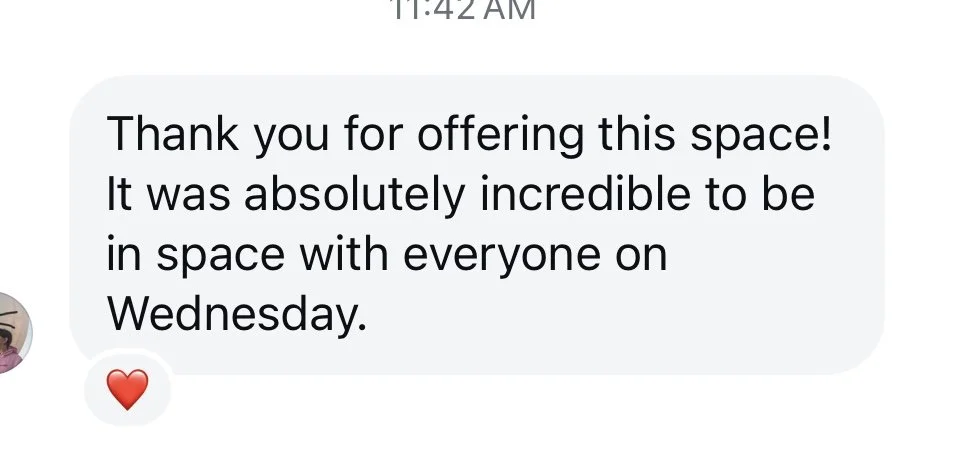
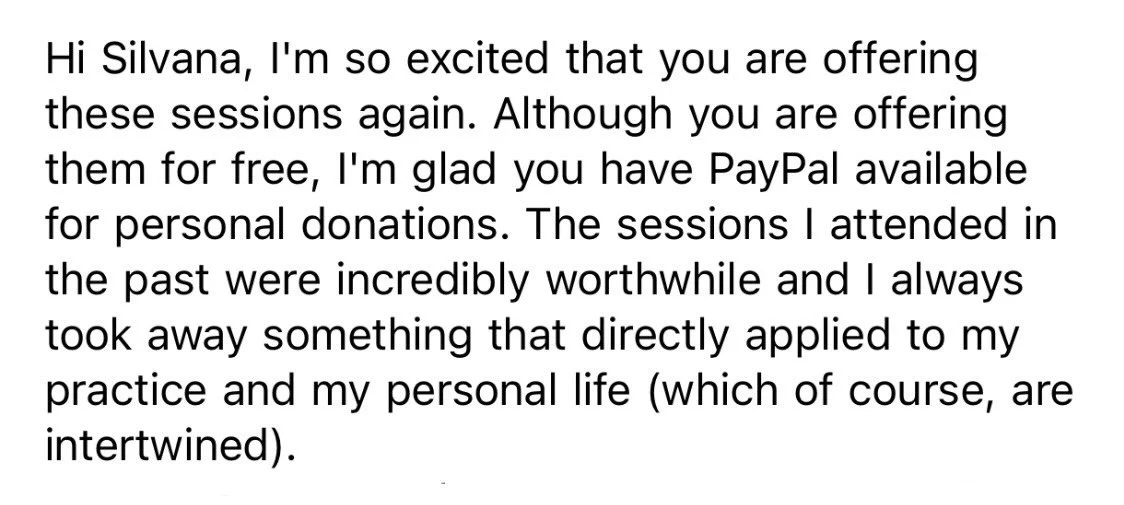
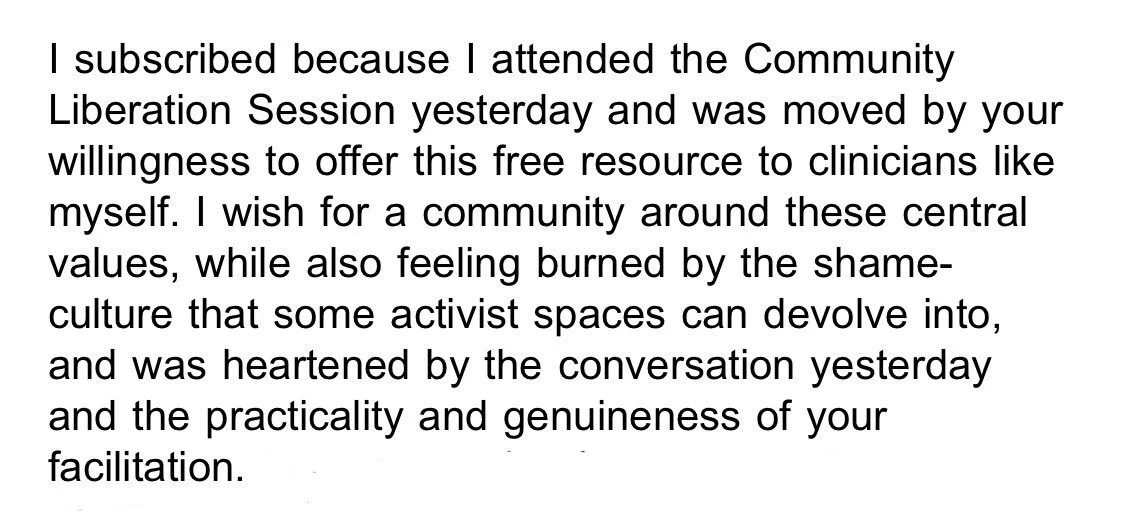
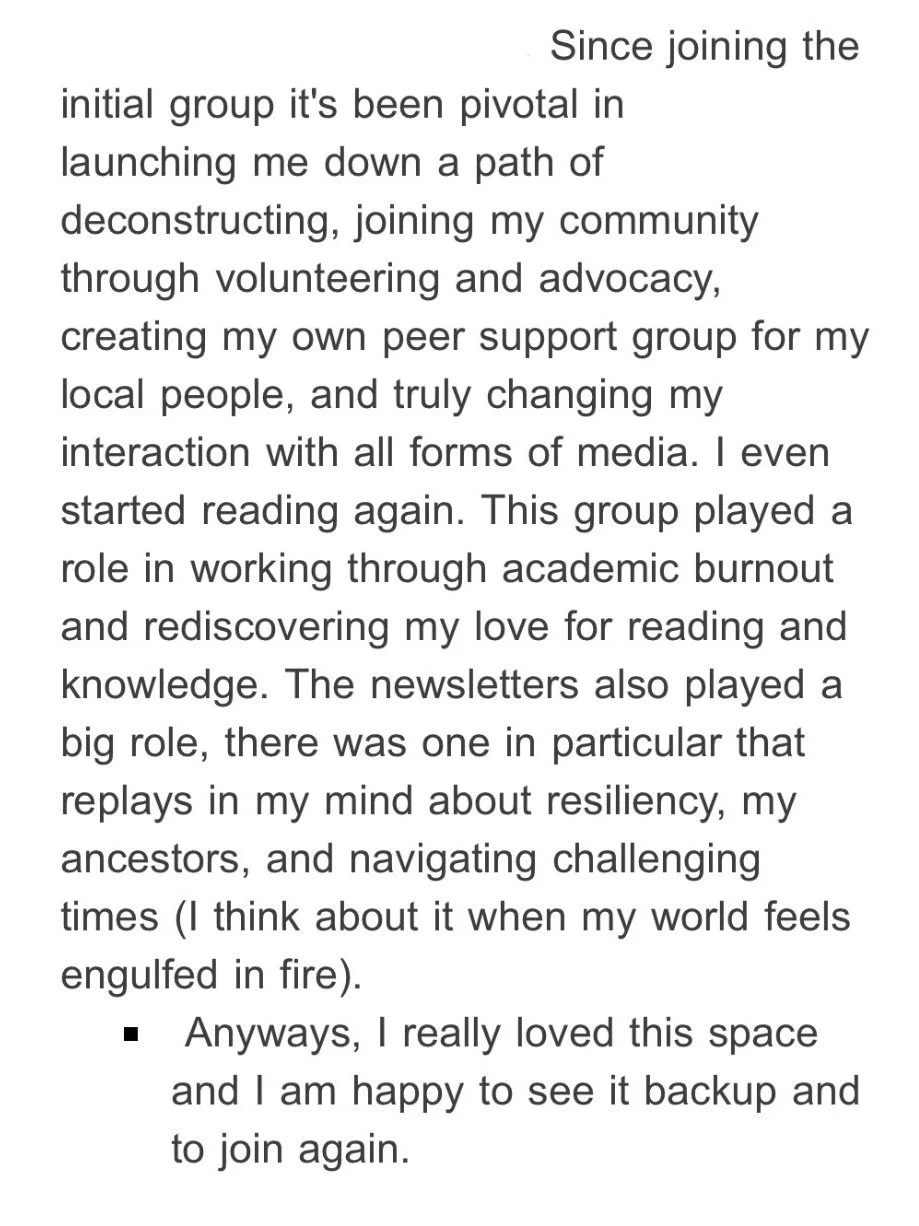
From 2026 participants: